
York Minster history: a site with many layers
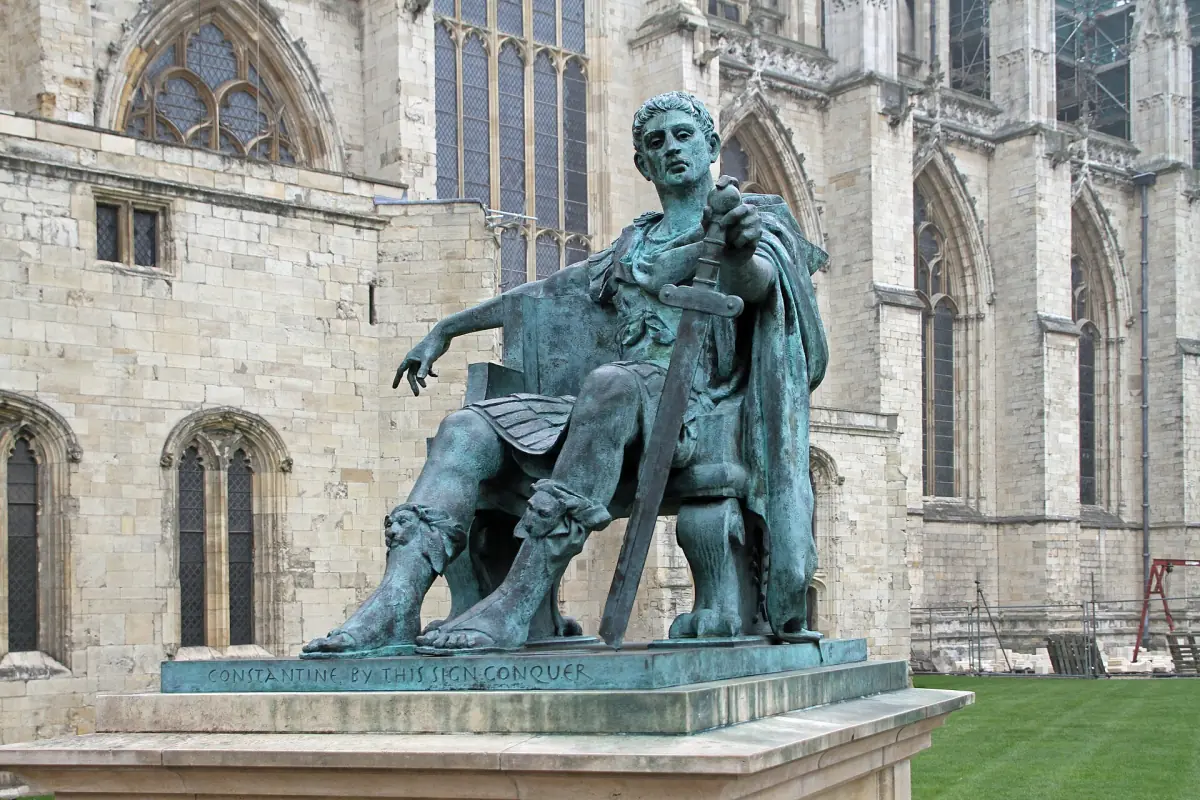
York Minster history reaches beyond the present Gothic cathedral. The Roman settlement of Eboracum began around AD 71, and Constantine was proclaimed emperor in York in 306. The site later became associated with early Christian churches, a Norman cathedral and the long construction of the building seen today.
The cathedral's timeline places the baptism of Edwin in a small wooden church in 627. A stone church followed in 633, and Ecgbert became York's first archbishop in 735. These dates offer landmarks in a story of successive buildings and institutions, rather than a description of a single structure surviving unchanged.
To connect the history with a visit, see tickets and the Undercroft and check the opening hours. The museum beneath the cathedral displays archaeological material from the site. The city walls offer another way to explore York's historic landscape.
Explore York's wider history
A city history walk from St William’s College adds context beyond the cathedral. Check its departure details when choosing a time. It is a walk through the city, so arrange a separate sightseeing visit if you want to explore the Minster interior and its museum.
Our picks: York history
A guided city walk complements the history of the Minster.
Hand-picked tours, booked through Viator. Prices are indicative starting prices in British pounds (as of October 2026). Tap a tour for live availability and the current price in your currency.
From Norman rebuilding to Gothic York
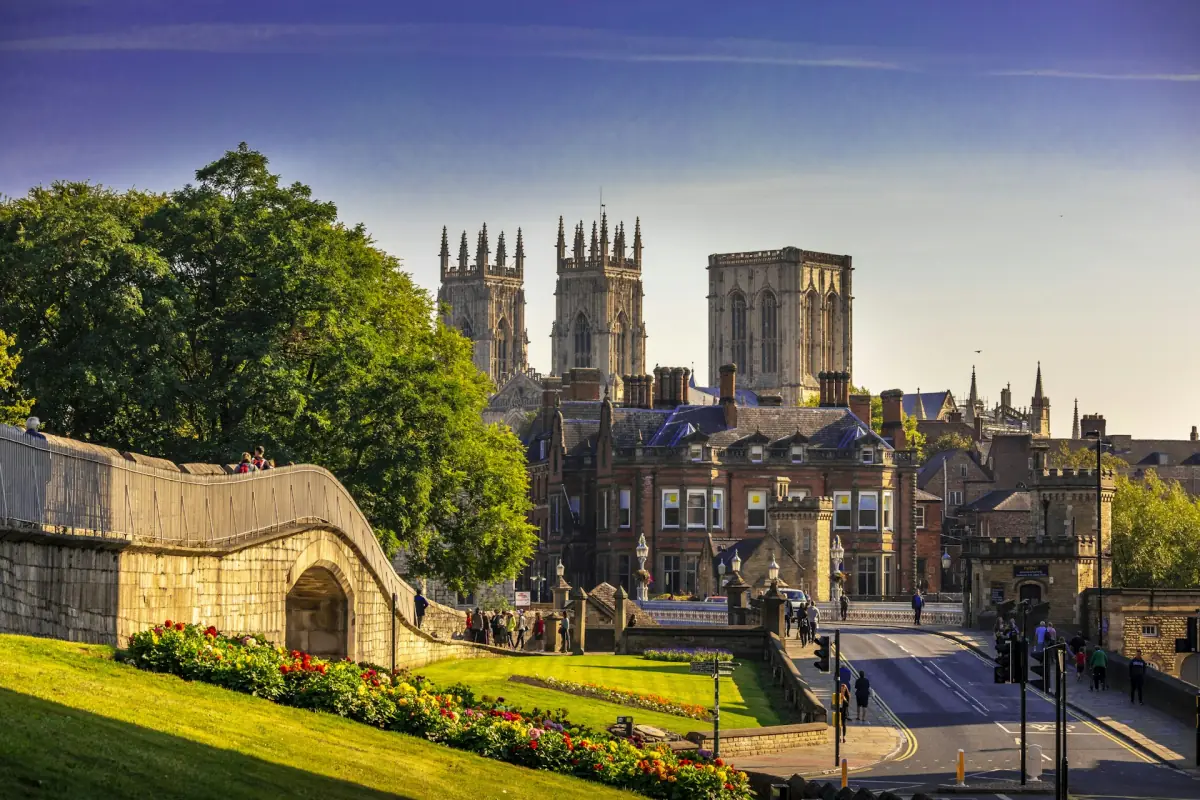
After a fire during the events of 1069, work on a new cathedral began around 1080. From 1154 its eastern part was replaced. Around 1225 a new South Transept was begun, part of the much longer campaign that produced the present cathedral over roughly 250 years.
Thinking in stages helps explain why the building is more than a monument to one date. Its spaces grew through a long sequence of construction. The plan is cruciform: the nave lies towards the west, transepts extend to north and south, and the quire occupies the central area before the East End. Give yourself time to move between these spaces and notice their different perspectives.
In 1328 Edward III and Philippa of Hainault married in the Minster. Their wedding is one episode connecting the building with the British monarchy. The fabric itself also records centuries of change, repair and care, making the building as much a story of continued use as of medieval construction.
The Great East Window and the Undercroft
The Great East Window brings medieval craftsmanship into view. John Thornton of Coventry was asked to create it in 1405 and completed the window in three years. Its subjects draw on Genesis and Revelation, from creation to the end of all things. Looking at the window after learning its story can make the scale and detail easier to appreciate.
Conservation is part of that history too. In 2008, 311 panels were removed for a conservation project that included protective glazing. The completed project belongs to the continuing care of the window, rather than a reason to assume the glass is still removed.
Below the cathedral, the Undercroft Museum brings together archaeological remains and historical objects. The space emerged from work to secure the Central Tower between 1967 and 1972. Excavations revealed Roman barracks remains, an Anglo-Saxon cemetery and foundations of the Norman Minster. The museum gives these different periods a shared setting.
Fire and restoration
The cathedral's timeline records fires in 1753, 1829, 1840 and 1984. Jonathan Martin caused the 1829 fire. These events are reminders that the building's history did not end when its medieval construction was complete. Repair and conservation form another part of the story visitors encounter today.
Allow time to see the cathedral as a place that has changed over centuries. Its use for worship continues alongside sightseeing. If you would like to attend a service, the Evensong guide explains how to plan that separately from a museum or cathedral visit.
History questions
When was Constantine proclaimed emperor?
He was proclaimed emperor in York in 306.
When was the first church associated with Edwin?
The cathedral timeline places his baptism in a wooden church in 627, followed by a stone church in 633.
Where can I see archaeological remains?
The Undercroft Museum contains remains and objects from the site's long history and is included in general sightseeing admission.